
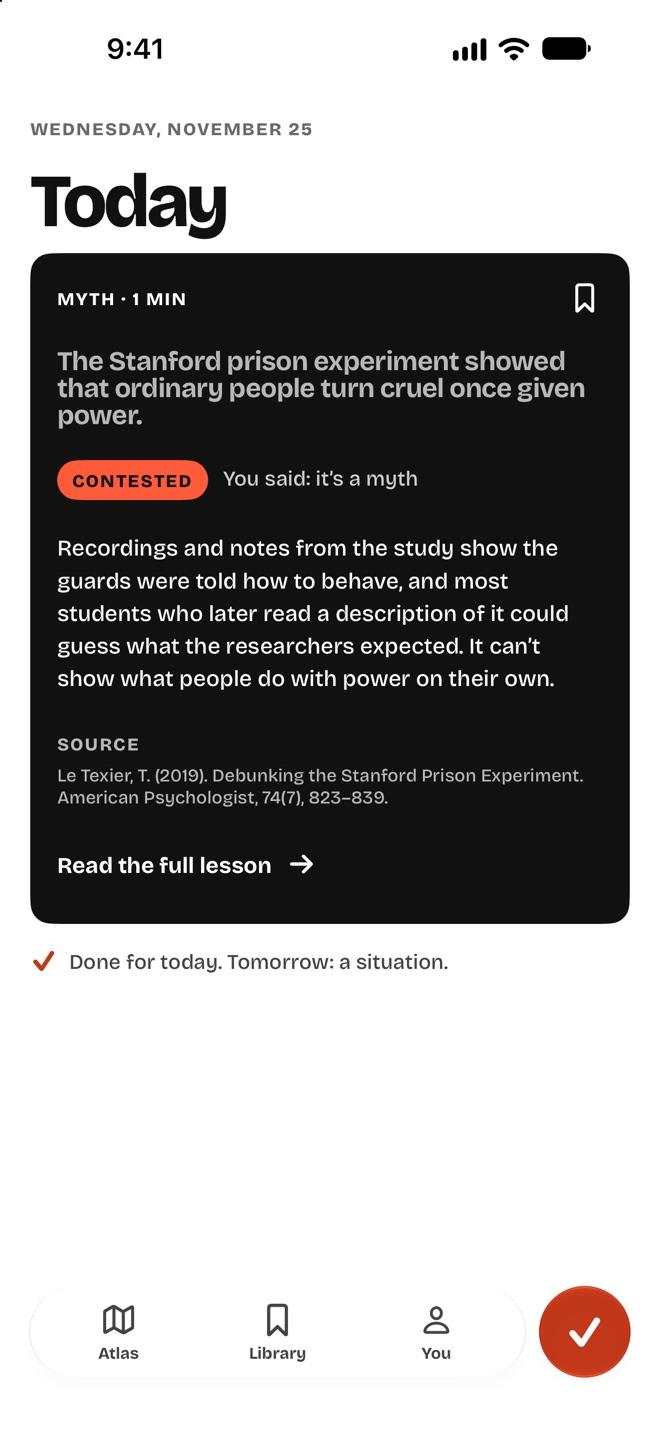
One card a day
A popular myth to judge, an everyday situation to explain, or a concept to learn. A minute, with its source.
For iPhone · 115 lessons, 209 sources
Take part in the experiments behind psychology's best-known findings, guess the result, then see what the study found and whether it held up.
First route free · 7-day trial · No account
115 lessons
209 sources cited
15 myths put to the test
5–6 minutes a lesson
The anchoring lesson, as it opens in the app. One wheel, one question, the 1974 result. Nothing you enter leaves this page.
Step 1 of 3
This comes from a classic 1974 study of how people estimate. Spin the wheel, then answer one question. Answer honestly and don't look anything up.
Five or six minutes, one finding, the whole story: what happened, why, and whether it held up.
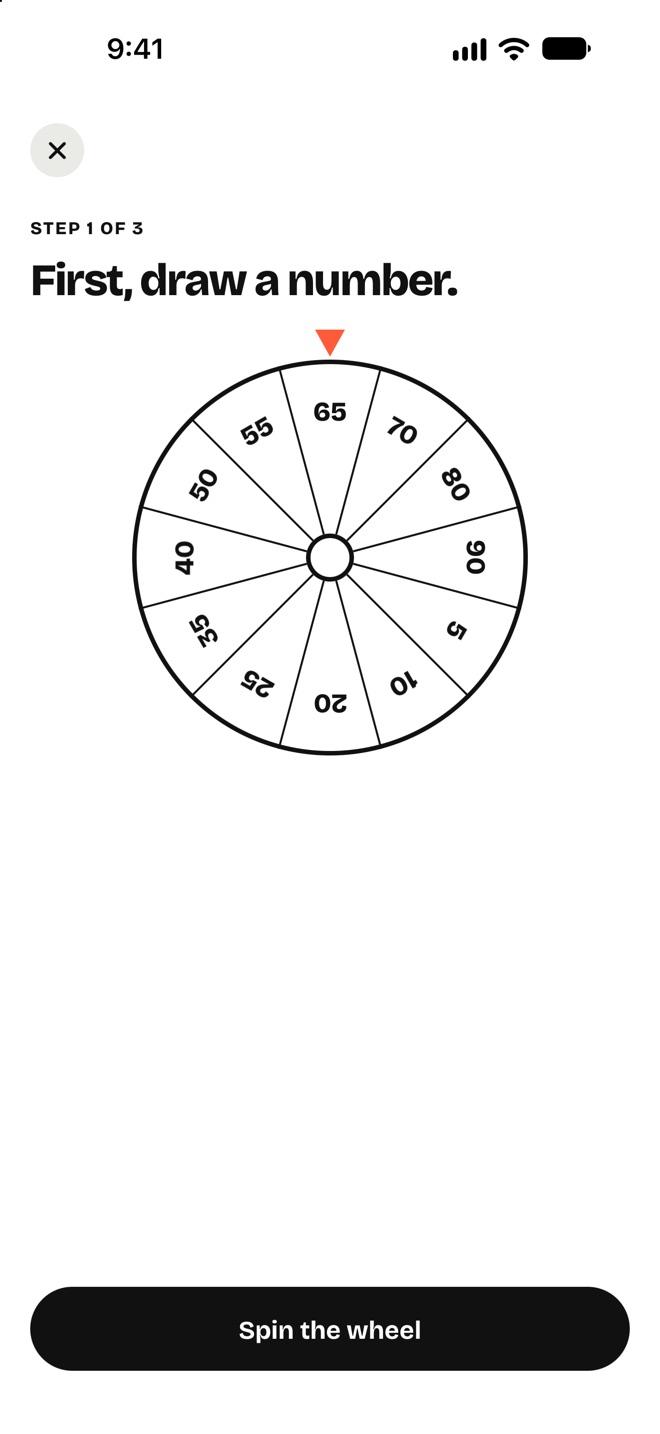
Each lesson starts with a case, or an experiment where you're the subject.
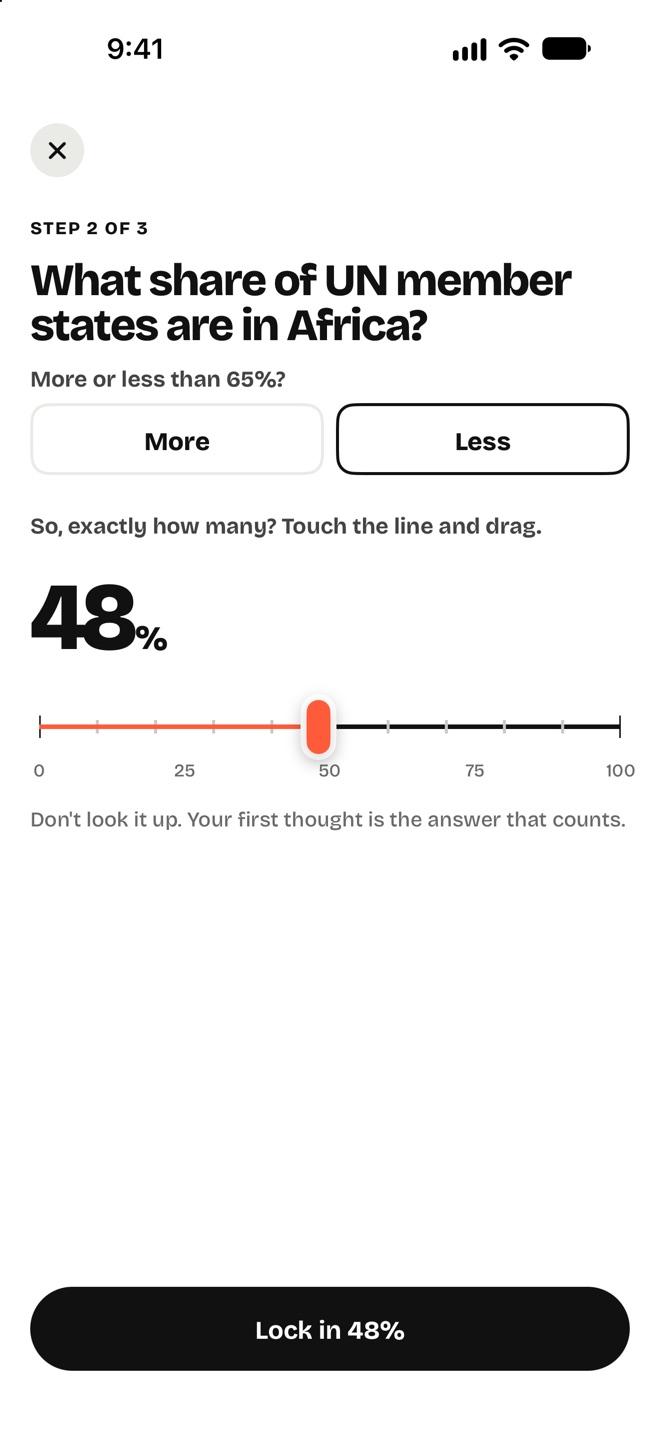
Commit to an answer before you see anything. Your first thought is the one that counts.
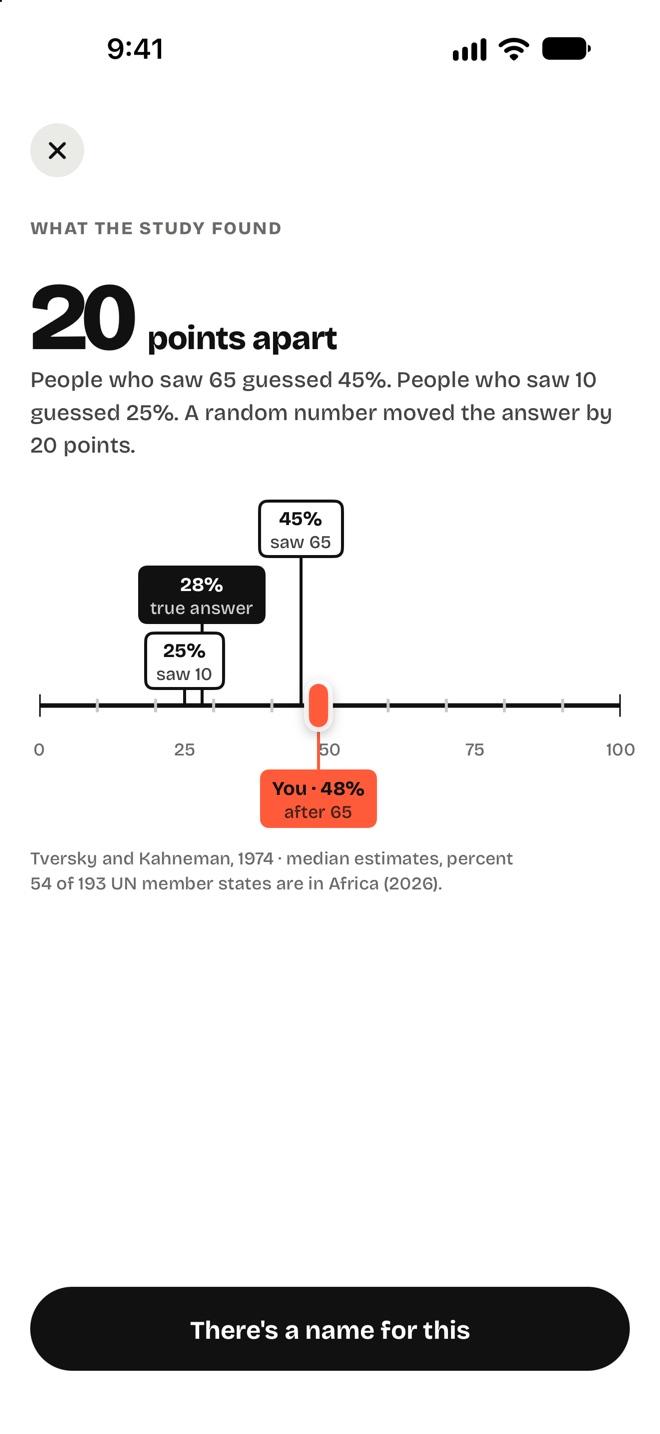
Your answer next to the published one, and what the researchers actually found.
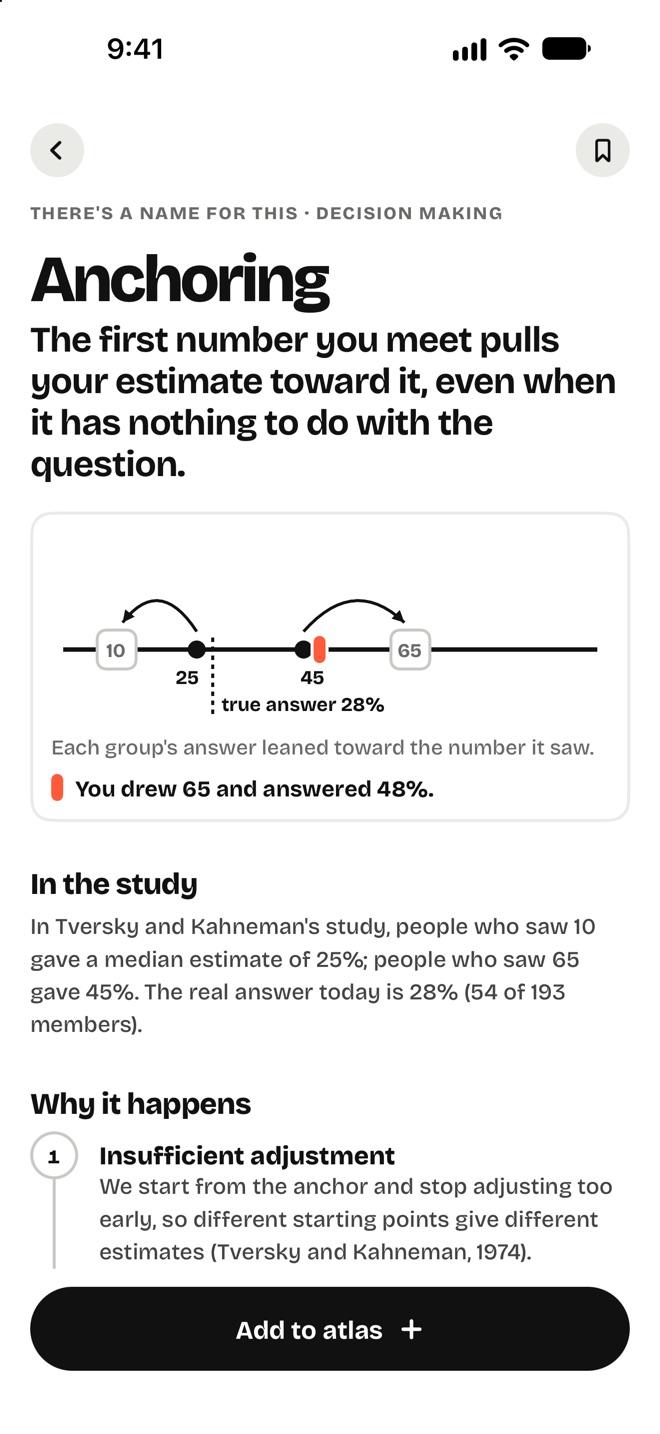
Why it happens, where it replicated and where it didn't, said plainly.
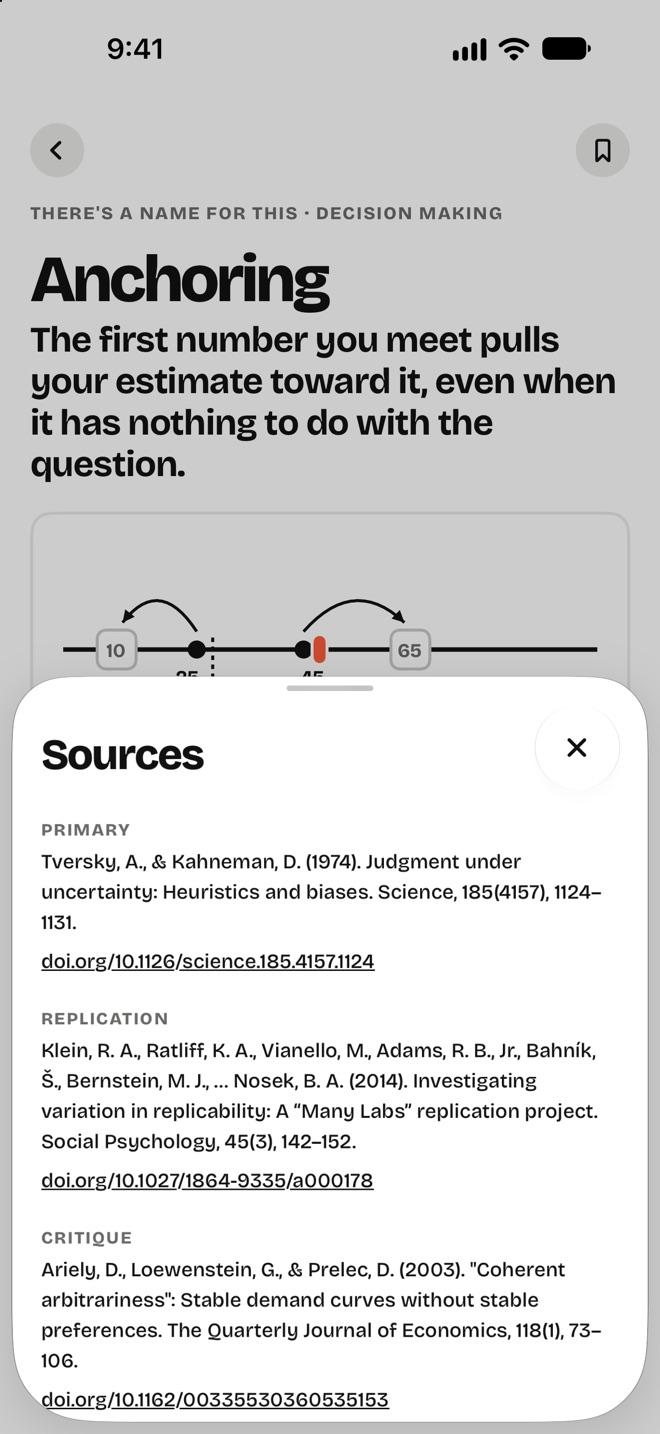
Every source in full, primary, replications and critiques, with a DOI link.
Every lesson ends with one of three labels. They say how well the finding holds up today, not how famous it is. When the evidence changes, the label changes with it.
The finding has been repeated by other researchers, often in large or preregistered studies, and still holds. It may be smaller than first reported.
The original result is real, but later studies disagree: some failed to repeat it, some found it much smaller or only under certain conditions. The lesson says which.
Careful later research found no reliable effect, or the claim never had good evidence behind it. The lesson says what was found instead.
One of these comes up on the Today tab every few days, each with its source. Judge them first.
Tap a card: true, or a myth?
Myth or not?
We only use 10% of our brain.
Myth or not?
You can tell someone is lying from their body language.
Myth or not?
Listening to Mozart makes you smarter.
Myth or not?
Thirty-eight neighbours watched Kitty Genovese’s murder and did nothing.
Myth or not?
People learn best when teaching matches their style: visual, auditory or hands-on.
Myth or not?
Letting off steam, like hitting a pillow, gets anger out of your system.
The lessons sit on a map. Follow a route or wander; the map shows what you've walked and what's ahead. New regions arrive as they're written and checked.
Why smart people misjudge
 41 lessons
How other people move you
 36 lessons
Why we choose, keep and lose people
 23 lessons
What you think you know
 15 lessons
What attention and memory leave out
 Being written · 38 concepts
How a mind grows and ages
 Being written · 35 concepts
Pick a route to start with. Your first route is free, every lesson of it.
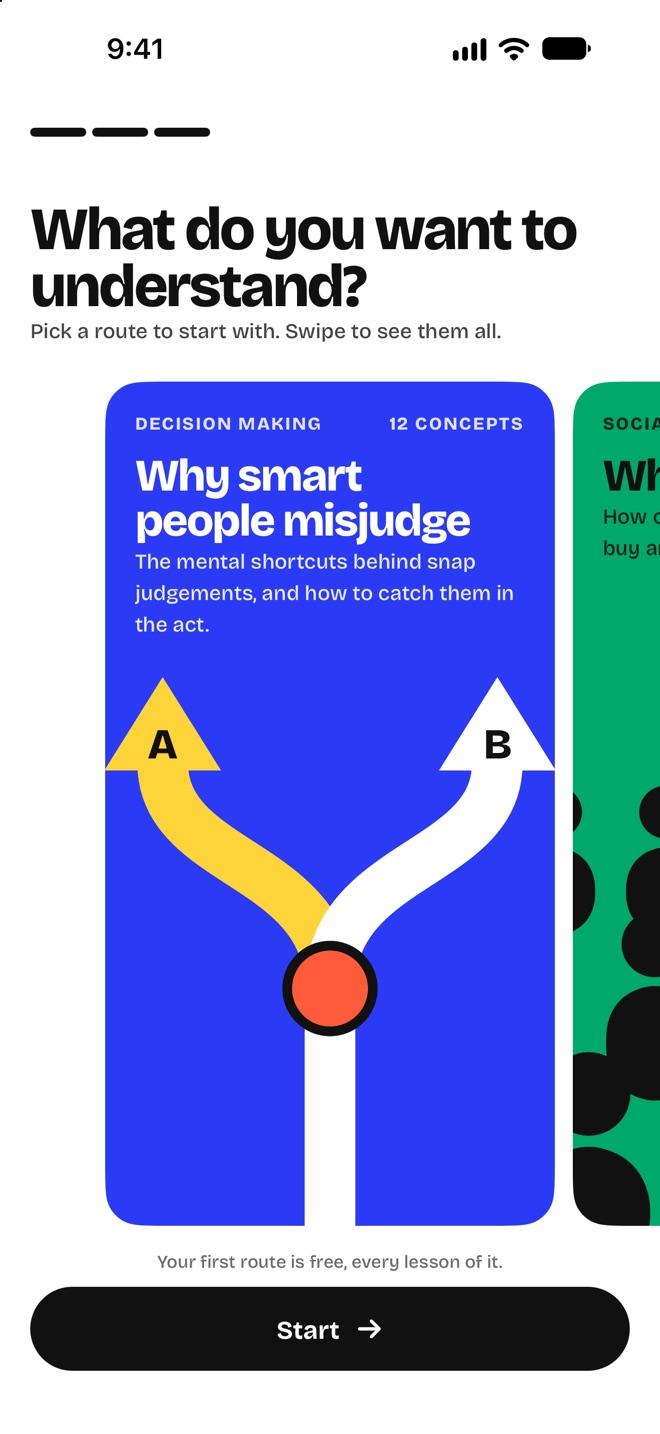
The mental shortcuts behind snap judgements, and how to catch them in the act.
12 lessonsHow other people steer what we do, buy and believe.
11 lessonsWhy we feel watched, think we’re above average, and explain away our own mistakes.
11 lessonsPrices, defaults and deals: why the same choice feels different depending on how it’s put.
11 lessonsHow liking starts, what keeps people close, and why we underrate how welcome we are.
12 lessonsA popular myth to judge, an everyday situation to explain, or a concept to learn. A minute, with its source.
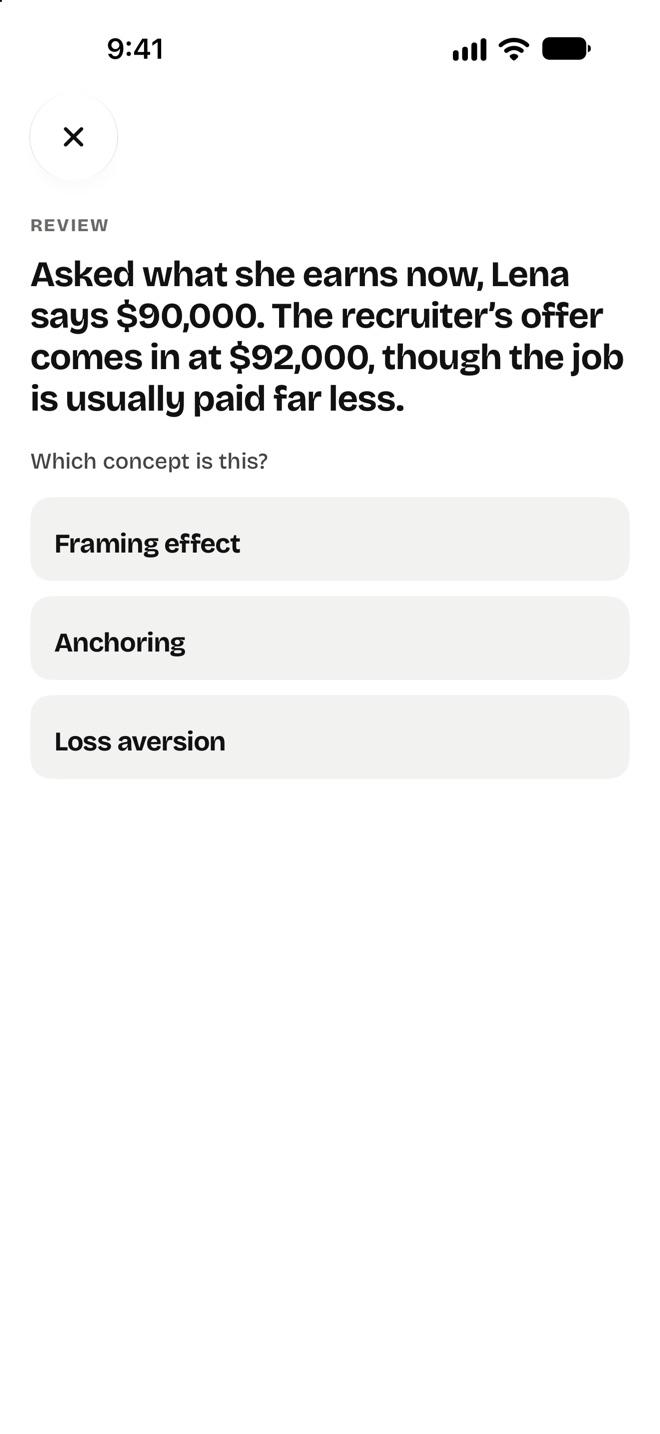
Days later, a short scene from real life: which concept is this? Recognising it is the skill.
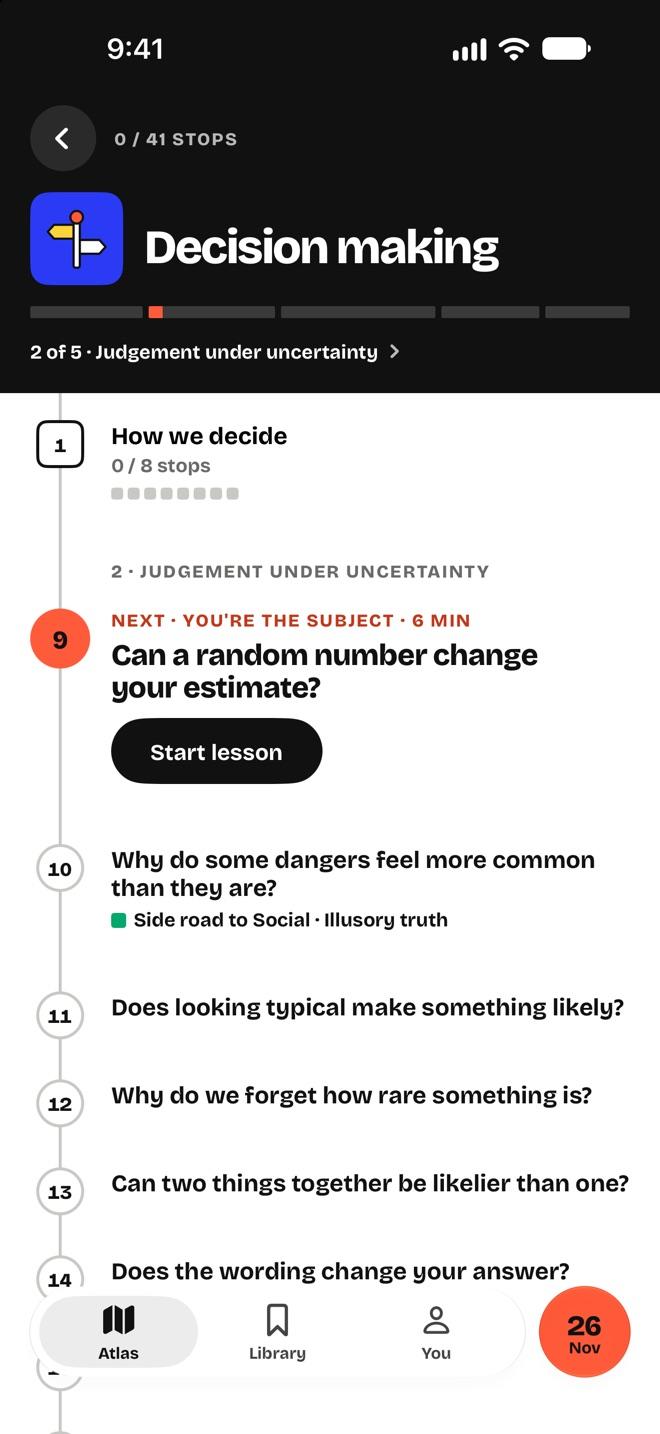
Every stop is one question. See what you've walked and what's ahead, and keep a streak that forgives a missed day.
One yearly subscription opens the whole map. Your first route, your reviews and the Today card stay free either way.
$34.99 a year
after a 7-day free trial, if you're eligible · US price, your local price shows in the App Store
Cancel any time in Settings → your name → Subscriptions. Billing is Apple's.
An iPhone app that teaches psychology's best-known findings, one short lesson at a time. Each lesson starts with a case or an experiment you take part in, asks you to predict the result, then shows what the original study found, how strong the evidence is today, and where the finding failed to replicate.
Every lesson lists its sources with full citations, at least one of them the original study, and a DOI link where one exists. Every number was checked against the paper itself. Each finding carries a label: strong, contested or debunked.
Your first route, start to finish, at full quality: every lesson and experiment in it. Your reviews and the daily Today card stay free too. The rest of the map needs the subscription.
One yearly subscription opens the whole map: $34.99 a year in the US (the App Store shows your local price before you start). If you're eligible, it starts with a 7-day free trial, and the app reminds you 2 days before the trial ends.
In iOS Settings: tap your name, then Subscriptions, then Mull, then Cancel Subscription. You can also open the same screen from the app's You tab. Cancel at least a day before the trial or the year ends to avoid the next charge.
No. Mull explains research about how people think and behave. It doesn't diagnose, assess or treat anything. If you're struggling, please talk to a professional or a local helpline.
No account, and nothing is collected. There are no servers of ours, no analytics, no ads and no tracking. Your progress stays on your iPhone.
English, Brazilian Portuguese, Spanish, German, French and Turkish.

For iPhone · in 6 languages: English, Brazilian Portuguese, Spanish, German, French, Turkish